
How to Prevent Ice Dams: Proven Winter Roofing Guidance for Minnesota Homeowners
Ice dams are one of the most misunderstood winter roofing problems in Minnesota. Many homeowners assume ice dams mean the roof was installed incorrectly. In reality, a properly installed roof does not prevent ice dams from forming. Instead, it helps protect your home from damage when ice dams occur.
This guide explains How to prevent Ice Dams, what role homeowners play, and how professional roofing systems reduce risk. It’s designed for residential homeowners in Lake City, Red Wing, Goodhue, Wabasha, Hastings, and surrounding areas.
What Ice Dams Are and Why They Form
Ice dams develop when snow melts on warmer sections of a roof and refreezes at colder edges. As this cycle repeats, ice builds up and traps water behind it. That water can then back up under shingles and leak into the home.
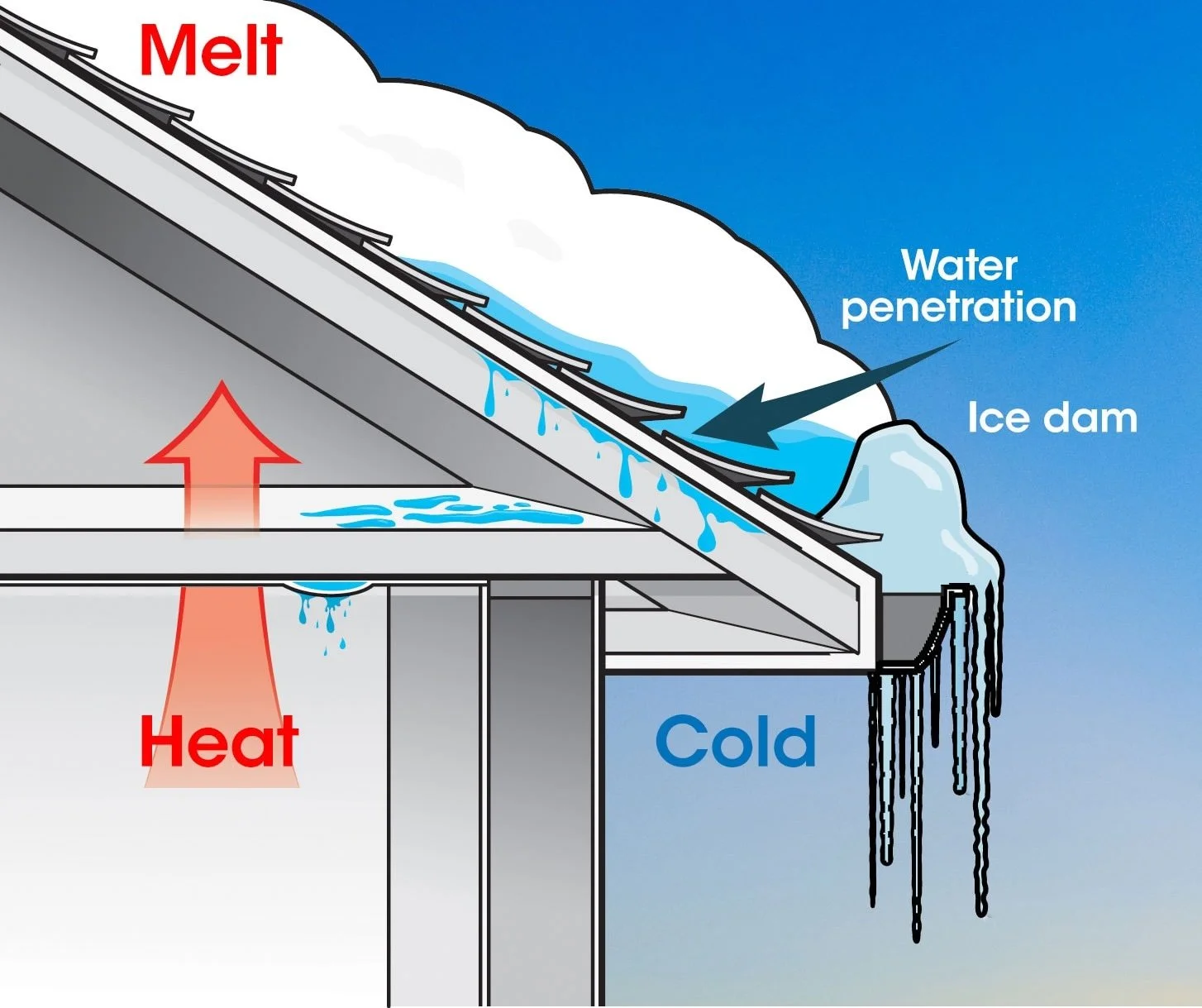
Simple illustration of how ice dams form on a residential roof.
Ice dams are caused by:
Heat loss from the living space
Uneven roof temperatures
Snow accumulation
Freeze-thaw cycles
They are not caused by shingles alone.
Not sure if you need a repair or replacement?
How to prevent Ice Dams: What Roofing Can and Can’t Do
This is the most important concept homeowners should understand.
What a Properly Installed Roof Does
Protects the roof deck from water intrusion
Uses ice and water shield at vulnerable areas
Includes proper flashing and underlayment
Resists damage during freeze-thaw cycles
What a Properly Installed Roof Does Not Do
Stop snow from melting
Eliminate ice dams
Control attic heat loss
In short, roofing protects against damage, not formation.
How Roofing Systems Protect Homes From Ice Dam Damage
A professional roofing system reduces risk in three critical ways:
Ice & Water Shield
Installed along eaves and valleys, this membrane seals around nails and blocks water intrusion if ice dams force water backward.
Flashing and Transitions
Correctly installed flashing prevents leaks around chimneys, walls, and roof intersections.
Quality Shingle Installation
Proper fastening and layout help shingles resist lifting, cracking, and moisture penetration.
These components are why ice dams don’t automatically mean roof failure.
Ice Dams Are Primarily a Homeowner Maintenance Issue
Preventing ice dams starts inside the home.
Homeowners control:
Insulation levels
Air sealing
Ventilation performance
Snow removal practices
Without addressing these, ice dams will return regardless of how new the roof is.
How to prevent Ice Dams With Proper Attic Insulation
Insulation keeps warm air inside the home and prevents uneven roof temperatures.
Best practices include:
Sealing attic air leaks
Maintaining proper insulation depth
Addressing insulation gaps
A consistently cold roof surface reduces melting and refreezing.
The Role of Roof Ventilation in Ice Dam Prevention
Ventilation helps remove warm, moist air from the attic.
Balanced systems include:
Intake vents at the eaves
Exhaust vents at the ridge or roof
When ventilation is insufficient, heat builds up and increases ice dam risk.
For technical homeowner guidance, the University of Minnesota Extension offers excellent resources: https://extension.umn.edu
Snow Removal: A Simple Step That Works
Removing snow from the lower few feet of the roof after heavy snowfall significantly reduces ice dam formation.
Safety tips:
Use a roof rake from the ground
Focus on eaves and overhangs
Avoid climbing onto icy roofs
This is one of the most effective prevention steps homeowners can take.
Local Insight: Ice Dam Prevention in Southeast Minnesota
Homes in Lake City, Red Wing, Goodhue, Wabasha, and Hastings face frequent freeze-thaw cycles due to temperature swings along the Mississippi River valley. These conditions make ice dams more common, even on newer homes.
Local prevention priorities include:
Extra attention to attic insulation
Proper roof edge protection
Routine winter inspections
Snow management after heavy storms
Working with a contractor who understands regional weather patterns makes a real difference.
When Ice Dams Become a Roofing Issue
Call a professional if you notice:
Water stains on ceilings or walls
Dripping near exterior walls
Shingle damage or lifting
Ice dams returning every winter
At that point, an inspection can confirm whether protective systems are doing their job.
Trusted Roofing Support in Southeast Minnesota
With over 25 years of construction experience, Skyline Roofing provides residential roof repair and roof replacement services throughout southeast Minnesota and western Wisconsin.
Skyline Roofing is:
Fully licensed in MN and WI
Focused on long-term roof performance
Backed by a lifetime installation warranty
Frequently Asked Questions About Ice Dams
Are ice dams caused by bad roofing?
No. Ice dams are usually caused by heat loss and attic conditions, not poor shingle installation.
Can a new roof stop ice dams?
No. A new roof protects against leaks but does not prevent ice dams from forming.
Who is responsible for preventing ice dams?
Homeowners manage insulation, ventilation, and snow removal.
Do heated cables solve ice dam problems?
They can help manage ice but do not fix the root cause.
When should I call a roofing professional?
If ice dams cause leaks, damage, or return year after year.
Does Skyline Roofing install ice and water shield?
Yes. Protective underlayment is part of a properly installed roofing system.